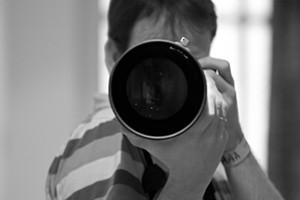
Photography doesn’t capture what happened. wrote about this back in 2015, when I was doing some work with Canon. The video in the article is a 3 minute watch, so take a look before I give away any spoilers.
At the time, it affirmed what I was learning. An uneasy discovery that photography, even digital photography, was not just ‘capturing what happened.’ As a photographer, I brought my own set of filters. The creative tool, the camera, was guided by my conscious and unconscious biases. Experiences and prior knowledge shaped the outputs, long before those of the viewers of the photographs shaped it by theirs.
My work today, with AI and data analysis, might seem a world away. It really isn’t. While much of the current talk about bias centres on the tools, rather than the tool users, the fact is that even the coldest pieces of data analysis and visualisation, without AI anywhere near them, are still influenced by what I bring to the work. One of the questions I almost always ask before sharing data with a customer is “what do you expect to see?” – it recentres on the viewers’ preconceptions. But it also helps me to reflect on where I have taken the work. The true picture is revealed in synthesising the different lenses. Taking the different perspectives, and reflecting on where they have come from:
Why do I think that? Is there evidence in front of me that challenges that thought? Is there evidence that I have not taken into account because of that thought? Am I comfortable or am I uncomfortable with the conclusions I am drawing? Why is that?
Canon called their experiment ‘Decoy.’ Data is full of decoys. Distracting noise and shadows that create patterns that lead to incorrect conclusions, when left unchecked. Part of my job is to tame those shadows, while staying true to the subject, as I move the lights and adjust the lens. We are all story tellers, and editors. We just work with different tools. From the TED talk to the spreadsheet on the desktop, we all shape narratives. We move the lights. We shift the angle. How we do that, and how consciously we do that, shapes the world around us.